How to grow portobello mushrooms at home on compost
Published
Gear for this job
All 8 picks compared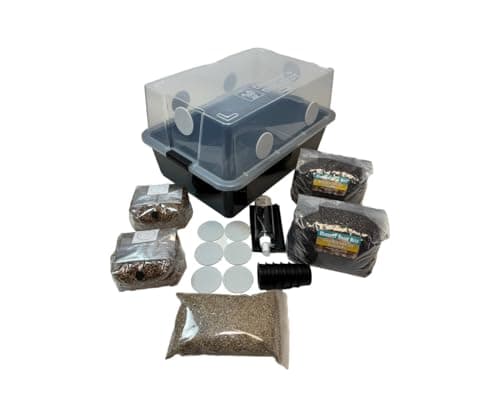
Mushroom Monotub Large 66Q Grow Kit
See price on AmazonSee it on Amazon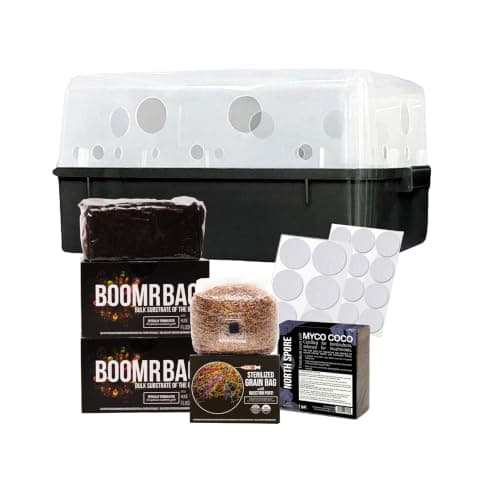
North Spore 'Boomr Bin' Monotub Mushroom Grow Kit for Dung-lovi...
See price on AmazonSee it on Amazon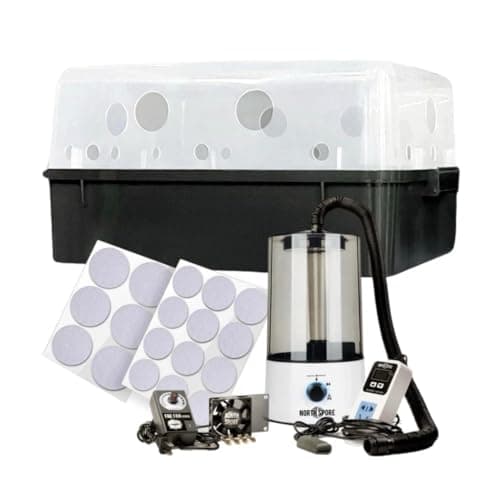
North Spore Automated 'Boomr Bin' Mushroom Monotub Kit
See price on AmazonSee it on Amazon
To grow portobello mushrooms at home you spawn composted, pasteurized manure with Agaricus bisporus grain spawn, cover it with a 1 to 2 inch casing layer once colonized, then drop the temperature to around 60 to 65 F to trigger fruiting. Portobellos are simply the same mushroom as white buttons and cremini, left to grow until the cap opens. It is a harder crop than oysters because of the compost and the casing, but it fits in a monotub or a deep tray.
Button, cremini and portobello are one species
White button, brown cremini and portobello are all Agaricus bisporus. White buttons come from a white strain picked young with the cap closed. Cremini are a brown strain picked at the same closed stage, and portobellos are that brown strain left for a few more days until the cap opens flat, the gills show and the cap reaches 4 to 6 inches across.
So growing portobellos means growing brown Agaricus and harvesting late. The upside is that a single grow gives you cremini and portobellos from the same tray: pick some early for cremini and let the rest open.
What you need: compost, spawn and casing
Agaricus does not grow on straw or wood alone. Commercial farms use a fermented compost of wheat straw, horse or poultry manure and gypsum, pasteurized so that the right microbes dominate. Making that compost at home takes weeks and a hot pile, so most hobbyists buy a ready sterile or pasteurized manure-based substrate in 5 lb bags instead. Plain CVG (coco coir, vermiculite and gypsum) is too poor in nutrients for good Agaricus yields; look for a blend with composted manure.
For spawn, Agaricus grain spawn is rarely sold ready colonized to hobbyists in the US. The usual route is a liquid culture of a brown Agaricus strain, injected into a sterilized grain bag and grown out for 2 to 3 weeks before spawning. You also need a container 6 to 8 inches deep, such as a monotub or a plastic tray with a loose cover, and casing material: peat moss buffered with garden lime, or coco coir with vermiculite.
Step by step: from spawning to casing
Break up the colonized grain spawn and mix it into the manure substrate at about 1 lb of spawn per 5 lb of substrate. Spread it 4 to 6 inches deep in the tub, level it gently without packing it hard and close the lid. Keep it dark at about 75 F. The mycelium spreads through the compost in 2 to 3 weeks as fine grey-white threads.
When the surface is fully colonized, apply the casing. Moisten peat with lime, or coir with vermiculite, until it holds together but drips only a few drops when squeezed, then spread it 1 to 2 inches deep. The casing is not optional with Agaricus: the mycelium must grow up into it, and bacteria that live in the casing help trigger pinning. Keep the casing damp with light misting while the mycelium works through it, which takes about 7 to 10 days.
Triggering fruiting and picking at the portobello stage
When white threads begin to show on the casing surface, change the conditions: drop the temperature to about 60 to 65 F, raise fresh air exchange by opening the filter holes or the lid gap, and keep humidity around 85 to 90 percent. The drop in temperature and CO2 is the signal to fruit. Small white pins appear within a week or so and grow into buttons over the following 5 to 7 days.
Pick some at the closed button stage for cremini. For portobellos, let them grow until the veil under the cap tears and the cap opens, usually a few days later. Twist the mushroom gently out of the casing instead of cutting it high, fill the hole with a little fresh casing and keep misting. A tray usually gives 3 or 4 flushes about a week apart, with the first flush the largest.
Common problems with Agaricus at home
Pins that never appear usually mean the room is too warm: Agaricus needs that cool drop to fruit, so a warm apartment in summer can stall it. A dry casing gives cracked, scaly caps, and a soggy one invites bacterial blotch, brown slimy spots on the caps. Mist lightly and often rather than soaking.
Long stems with small caps point to too much CO2, so increase fresh air. Green mold on the surface is Trichoderma, which often comes from compost that was not fully pasteurized or was spawned too thinly. Remove small patches with a spoon and some casing around them; if it spreads, discard the tray outside.
Frequently asked questions
Can I grow portobellos from store-bought mushrooms? It is possible to clone a fresh cremini onto agar, but it requires sterile technique and many supermarket strains fruit poorly after cloning. A known liquid culture is far more reliable.
How long does it take to grow portobellos? Plan on 2 to 3 weeks for grain spawn, 2 to 3 weeks for the compost to colonize, about 10 days for the casing and about 1 to 2 weeks to the first portobellos, so roughly 7 to 9 weeks in total.
Do portobello mushrooms need light? No. Agaricus is one of the few cultivated mushrooms that fruits normally in the dark, which is why commercial farms grow it in dark rooms. Some light for checking the tray does no harm.
Are there portobello grow kits? Ready-to-fruit Agaricus kits are rare in the US compared with oyster kits. Most home growers assemble their own from a liquid culture, a grain bag and a manure-based substrate.
What you need for this
- See price on AmazonAmazon
Mushroom Monotub Large 66Q Grow Kit
From Best monotub kits and bulk fruiting tubs for home mushroom growing
 See price on AmazonAmazon
North Spore Organic 'Wood Lovr' Sterile Hardwood Mushroom Subst...
From Best sterile mushroom substrate bags: masters mix, hardwood and CVG
 See price on AmazonAmazon
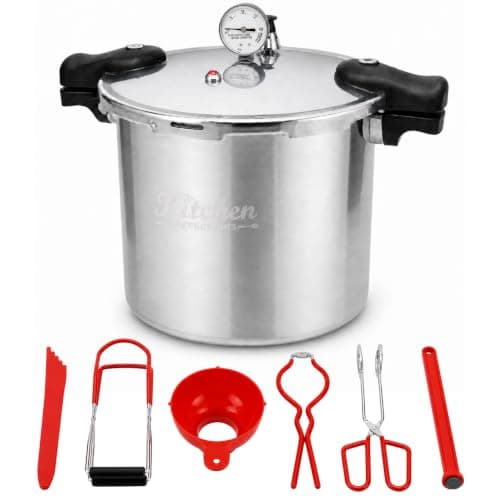
Kitchen Affections 24 qt canner kit, 10 and 15 psi
From Best pressure cookers for sterilizing sawdust blocks at home