What is mushroom spawn, and how do you use it?
Published
Gear for this job
All 7 picks compared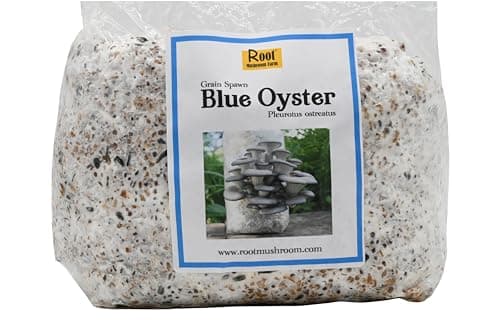
Root Mushroom Farm blue oyster grain spawn, 5.5 lb
See price on AmazonSee it on Amazon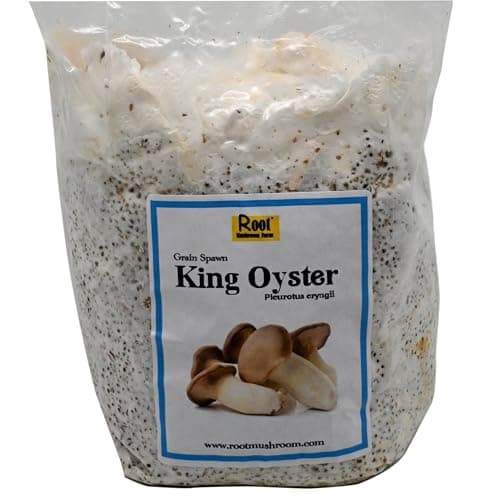
Root Mushroom Farm king oyster grain spawn, 5.5 lb
See price on AmazonSee it on Amazon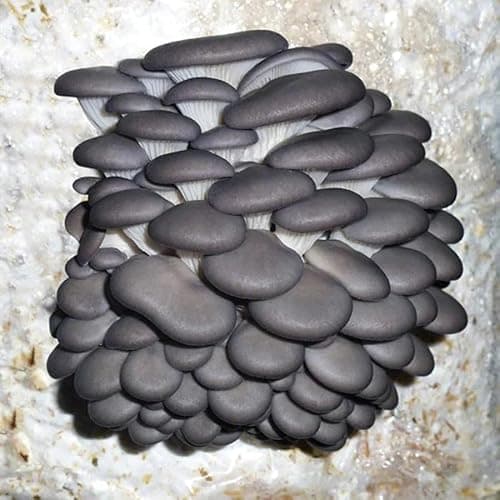
Liquid Fungi blue oyster grain spawn, 1 lb
See price on AmazonSee it on Amazon
Mushroom spawn is living mushroom mycelium that has already colonized a carrier such as grain, sawdust or wooden dowels, and it is what you mix into a bigger substrate to start a crop. It plays the role that seed plays for a gardener, except it is not dormant: it is a growing culture that you transfer before it runs out of food. Below is how spawn differs from spores and cultures, the three main types, how much to use and how to tell good spawn from bad.
Spawn, spores and cultures are three different stages
Spores are the microscopic reproductive cells a mushroom drops from its gills. Each spore is genetically different, so a spore syringe gives you a mix of strains, slow starts and a higher chance of contamination. A culture is a clean, single strain of mycelium kept on agar or in a liquid broth. It is the step labs use to pick a vigorous strain and keep it free of mold and bacteria.
Spawn is the next stage: that culture is expanded onto sterilized grain or sawdust until the whole bag is white with mycelium. The point of spawn is volume. A few milliliters of liquid culture colonize one jar of grain; one jar of grain can colonize about ten more jars; and those jars colonize bags of bulk substrate. Each step multiplies the mycelium so it can outcompete the mold spores that are always present in a home. Buying ready spawn lets you skip the sterile lab steps entirely and start at the bulk stage.
The three main types of spawn and what each is for
Grain spawn is mycelium on rye, millet, wheat berries, oats or sorghum. The kernels are packed with starch, so it colonizes fast and carries a lot of energy into the substrate. Many inoculation points per pound make it the standard choice for indoor bags, buckets and monotubs, and for oysters on straw. The catch is that grain is attractive food for bacteria and pests, which is why grain spawn is never used outdoors on logs.
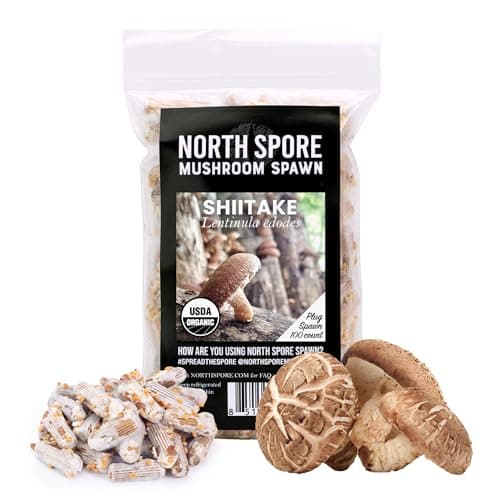
Sawdust spawn is mycelium on hardwood sawdust. It has less energy than grain but it is cheaper per pound, resists contamination outside better and is what you pack into log holes with an inoculation tool or spread in wood chip beds for wine caps. Plug spawn is the same idea on short hardwood dowels: you drill holes in a fresh log, tap the plugs in and seal them with wax. Plugs are slower than sawdust but need no special tool, which makes them the usual pick for a few shiitake or oyster logs.
How much spawn to use
Spawn rate is the weight of spawn as a share of the wet weight of the substrate. Home growers usually work between 10 and 20 percent. A common rule printed on supply bags is 1 lb of grain spawn per 5 lb of bulk substrate, which is about 20 percent. Higher rates colonize faster and leave less time for mold to get a foothold; lower rates save money but stretch colonization by a week or more.
For oysters on pasteurized straw, 10 to 15 percent is a solid starting point; for a fussy substrate or a beginner, go to 20 percent. For logs the measure is holes rather than weight: the usual pattern is holes about 6 inches apart along the log and rows 2 to 3 inches apart, offset in a diamond pattern, which works out to roughly 40 to 50 plugs for a 3 to 4 foot log of 4 to 6 inch diameter.
Storing spawn before you use it
Spawn is alive and keeps eating, so use it soon. Fully colonized grain spawn is best within a week or two of arrival. Most species keep for several weeks in a refrigerator at around 35 to 40 F, which slows growth; sawdust and plug spawn usually keep a few months chilled. Let refrigerated spawn warm to room temperature for a day before use.
Two exceptions are worth knowing. Pink oyster is a tropical species and does not like the fridge, so keep it at room temperature and use it within days. And never freeze spawn: ice crystals kill the mycelium. If the bag starts forming small mushrooms or turns yellow and liquid pools at the bottom, it has been stored too long and should be used at once or discarded.
How to tell good spawn from bad
Good grain spawn is solid white or off-white, with mycelium wrapping every kernel and the bag holding together as a firm block when you squeeze it. It smells earthy or of fresh mushrooms. A little yellow liquid (metabolites) or a few small pins are normal on older spawn and do not mean contamination.
Throw out spawn with green, blue-green, black or pink patches, which are mold colonies, or kernels that look wet, slimy and grey with a sour or rotten smell, which is bacterial contamination. Uncolonized grain inside an otherwise white bag also means the spawn is not ready. Contaminated spawn passes the problem to everything you mix it into, so it is never worth the gamble.
Frequently asked questions
Can I make my own spawn? Yes, but it needs a pressure cooker to sterilize grain at 15 psi, a clean workspace such as a still air box and a clean culture. Many growers buy spawn for the first few grows and only start making it once they are using several bags a month.
Is mushroom spawn the same as a grow kit? No. A grow kit is a block that is already fully colonized and ready to fruit. Spawn is the starter you mix into your own substrate, so it gives more mushrooms per dollar but asks for more work and a pasteurized or sterilized substrate.
Can I use grain spawn on logs? It is not recommended. Exposed grain on a log feeds bacteria, insects and birds before the mycelium can move into the wood. Use plug or sawdust spawn for logs and keep grain spawn for indoor bags, buckets and straw.
How long does spawn take to colonize a substrate? Indoors at room temperature, oyster spawn usually colonizes pasteurized straw or a 5 lb bag in 2 to 3 weeks. Slower species such as shiitake take 6 weeks or more on sawdust, and logs need 6 to 18 months before the first flush.
What you need for this
- See price on AmazonAmazon
Root Mushroom Farm blue oyster grain spawn, 5.5 lb
 See price on AmazonAmazon
North Spore organic shiitake plug spawn, 100 ct
From Best shiitake plug spawn and what you need to inoculate a log
 See price on AmazonAmazon
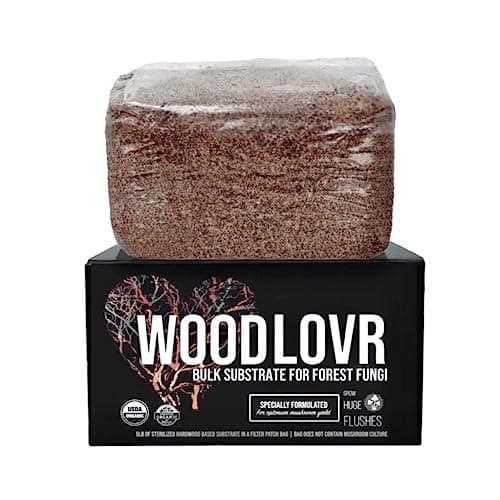
North Spore Organic 'Wood Lovr' Sterile Hardwood Mushroom Subst...
From Best sterile mushroom substrate bags: masters mix, hardwood and CVG